
Summary: This article explains how gentrification — the process where low-income neighborhoods are reshaped by new development, rising costs, and displacement — can be mitigated through community action and policy strategies. Gentrification often raises rents and property taxes, pushing longtime residents out and eroding the cultural and economic fabric of communities.
To help protect residents and preserve neighborhood identity, the article outlines seven practical ways to avoid gentrification:
- Build Community Connections — Strengthen ties with neighbors and create local solidarity that supports resistance to displacement.
- Demand Affordable Housing — Advocate for policies and developments that include affordable units and rethink affordability standards to reflect local incomes.
- Adopt Housing Strategies — Preserve and create affordable housing through incentives, rehabilitation of existing stock, rent control, and housing programs that promote long-term stability.
- Protect Homeowners via Tax Policy — Use property tax freezes or deferments to help longtime homeowners stay in their homes even as tax assessments rise.
- Leverage Zoning & Regulations — Adjust zoning and housing laws to support mixed-income development and affordable units, limiting displacement pressures.
- Empower Residents — Organize and educate local residents so they can collectively engage in community planning, oppose harmful development, and elect supportive leaders.
- Engage Elected Officials — Mobilize collective action to influence legislation, require community input in planning processes and support equitable land-use policies.
Together, these approaches emphasize collective action, policy intervention, housing protection, and community empowerment as core pillars to minimize the negative effects of gentrification and retain neighborhood diversity and stability.
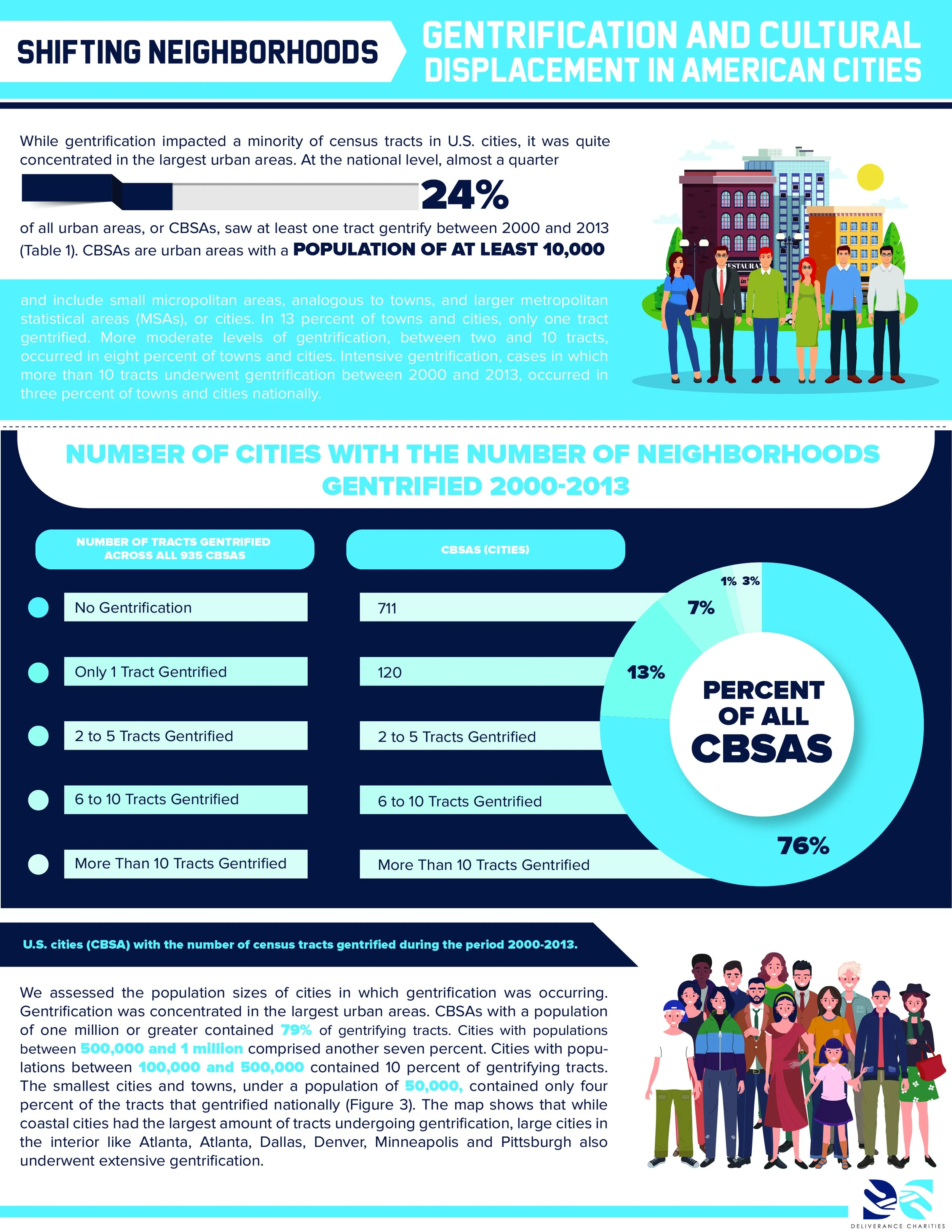
Gentrification is when old buildings in a low-income neighborhood are torn down and new buildings are built, big businesses move in, and the demographic of the neighborhood changes. Gentrification can best be described as the process that dislocates traditional low-income residents (which are usually residents of color) and changes the essential character of the neighborhood.
While gentrification may increase property value, it also raises rents and property taxes, which make low-income families relocate out of their neighborhoods into another one. Various studies have shown that gentrification can have disastrous consequences on the community, small businesses, and families; many families have to spend more than half of their income on rent thereby sacrificing doctor’s visits, heat, and even food.
In most communities, gentrification induces instant distrust. It implies the arrival of selfish developers, investors, and corporate chains replacing locally owned, independent businesses. Analysis by researchers at the National Community Reinvestment Coalition found that at least 135,000 black and Hispanic residents were displaced from their neighborhoods during the period of the study.
The gentrification process may seem inevitable, but it can be avoided. Community leaders and housing activists prove that there are ways to avoid gentrification and keep long-time minority residents from being displaced.
Ways to Avoid Gentrification
#1. Connect with your Neighbors
Getting to know your neighbors and talking to people on your block can help build connections and alliances. Connections are the best foundations for building a community. This alone cannot prevent gentrification but will do wonders in conjunction with other ways.
Neighborhood solidarity will help in resistance to eviction of people in the neighborhood. Sometimes neighbors can confront the marshals directly to prevent the removal or moving the family back despite the judge’s order.
#2. Demand Affordable Housing
Gentrification is about systematic economic violence based on decades of racist housing policy that has denied people of color, especially black people, access to fair and equal housing. Therefore, gentrification cannot happen without housing inequality. A significant technique for combating gentrification is to protect existing affordable housing and demand that newly constructed housing be affordable.
Join with others in your neighborhood to demand two things: that any new development includes a set number of affordable housing units, and that the definition of “affordable” in your city is changed.
The city should use area median salaries and prioritize those earning less than 60% of median income, particularly for those who are homeless or at risk of becoming homeless. Regulatory agreements and community land trusts should be used to ensure that all housing funded with public money remains affordable in perpetuity.
Finally, the city’s rent rules must be reinforced in order to safeguard low-income renters, prevent evictions, and persecute landlords who break them.
#3. Housing Strategy
The preservation and creation of affordable housing are some of the top housing strategies to avoid gentrification. To ensure that affordable housing is included in new development, it’s recommended by experts that city-based developers’ incentives, such as fee reduction, tax reduction, or fast-track processing, together with strengthened regulations.
A more cost-effective way of providing affordable housing than new construction is funding the rehabilitation of existing housing stock to avoid its sale or destruction.
Experts also recommend policies aimed at residents to promote stability. In addition to freezing property taxes for vulnerable homeowners, rent control, and HUD (Department of Housing and Urban Development)-sponsored programs such as the Housing Choice Voucher (HCV) and Low Income Tax Credit (LIHTC), initiatives that address the concentration of poverty should be explored. These include giving HCV tenants a more flexible rental assistance limit and providing support by local housing authorities.
#4. Reduce or freeze property taxes to protect long-time residents
Another thing to consider is tax programs to help retain long-time homeowners in an at-risk neighborhood. The city council should pass a bill that allows homeowners whose taxes have grown by 10% or more to defer property tax payments until they sell. Approval of the state legislature should be a requirement.
#5. Prevent gentrification through zoning and other housing regulations
To keep residents in their neighborhoods and prevent gentrification, cities need to raise economic growth and opportunities in low-income communities and tear up existing zoning laws. This would take some serious changes of local zoning regulations and existing housing laws, building more immediately affordable housing units, and going in on mixed-use, mixed-income properties.
#6. Empower residents to resist gentrification
Another way to avoid gentrification is organizing and educating residents. The answer to gentrification lies in education and organization. According to Business Insider, the only real way to achieve success is to organize people so they can collectively respond to real estate developers, finance capital, and elect officials who are more interested in keeping working-class people in their homes than in building new real estate.
The national organization Right to the City challenges the organized group who admittedly have the advantage during gentrification because of their wealth by organizing renters and/or working-class homeowners. Renters’ associations, neighborhood associates, and activist groups are provided with political education to confront the ideology that homes are just commodities to be bought and sold without thinking about what happens to the neighborhood.
#7. Confront Elected Officials
Residents should start a movement to combat gentrification and supports affordable housing. A way to avoid gentrification often involves fighting for legislation that requires input when it comes to city planning or equitable land use.
You can start where you’re, you can attend meetings in your neighborhood or your building, or start an association, or join a tenant’s union. If you’re all united you can never be divided.
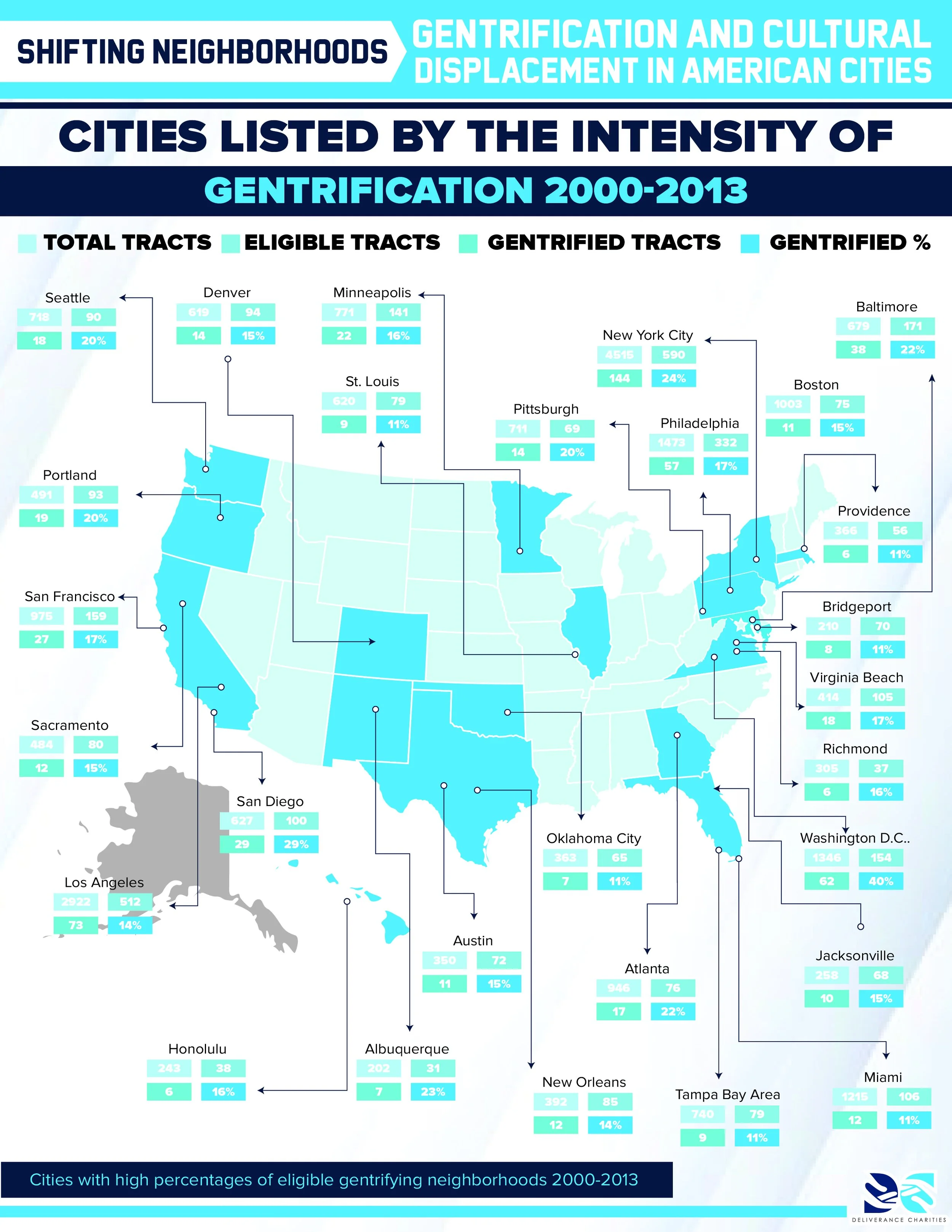
You can also click here to read about a recent example of gentrification in our local Miami neighborhood.
Leave a Reply